

Facelift Surgery (Rhytidectomy)
Facelift surgery reduces visible signs of facial ageing by tightening sagging skin, repositioning underlying tissues, and removing excess skin from the lower face and neck. Ageing, sun exposure, gravity, and genetics cause the facial tissues to descend, jowls to form, and the neck to loosen over time. Modern facelift techniques focus on repositioning deeper facial structures — not simply pulling skin tight — resulting in longer-lasting, more natural outcomes. The procedure is often combined with neck lift, brow lift, eyelid surgery, or fat grafting for comprehensive rejuvenation.
What does a Facelift procedure involve?
Your surgeon will assess the degree and pattern of facial ageing, skin quality, neck contour, and fat distribution before planning the appropriate technique. Several approaches exist:
Mini facelift: Addresses early ageing with minimal incisions around the ears. Suitable for patients in their forties and fifties with mild jowling and good skin elasticity. Faster recovery but less dramatic results.
Standard facelift: The most common approach. Incisions begin in the hairline at the temples, continue around the ear, and into the lower scalp. The SMAS layer is lifted and repositioned, excess fat managed, and skin re-draped without tension.
Deep plane facelift: The SMAS and overlying skin are released and lifted as a single unit. Provides greater correction of the midface and nasolabial folds, with more natural and longer-lasting results.
Neck lift addresses excess neck skin, prominent muscle bands, and submental fullness, and is commonly performed alongside facelift. Fat grafting to the cheeks, temples, and under-eye area can restore lost volume.
Surgery takes three to five hours under general anaesthetic. Small drains are placed behind the ears and removed the following day.
Your Recovery
Swelling, bruising, and tightness are expected for one to two weeks. Most sutures are removed at seven to ten days. You can return to desk work at two weeks once bruising is manageable with makeup, and resume strenuous exercise after four to six weeks. The face continues to settle and soften for three to six months, with final results apparent at six to twelve months. Scars within the hairline and around the ears fade over twelve to eighteen months.
Risks and Complications
Haematoma — the most common complication, may require drainage
Infection
Nerve injury causing temporary or permanent weakness or numbness
Asymmetry
Hair loss along incision lines (usually temporary)
Skin necrosis — higher risk in smokers
Pixie ear deformity if excessive tension is applied at closure
Scarring
Need for revision surgery
Frequently Asked Questions
How long do facelift results last?
A well-performed facelift typically lasts seven to ten years. You will continue to age, but should always look better than if you had not had surgery.
Will I look natural?
Modern techniques aim for a refreshed, rested appearance rather than an obviously stretched or 'windswept' look. The goal is to preserve your natural character while turning back the clock.
What is the difference between a facelift and non-surgical treatments?
Non-surgical options like fillers and thread lifts offer subtle, temporary improvement. A facelift provides more dramatic, comprehensive, and long-lasting results for moderate to advanced ageing.
When can I return to social activities?
Most patients are comfortable returning to desk work and limited social activities at two to three weeks. Plan for three to four weeks before important events.
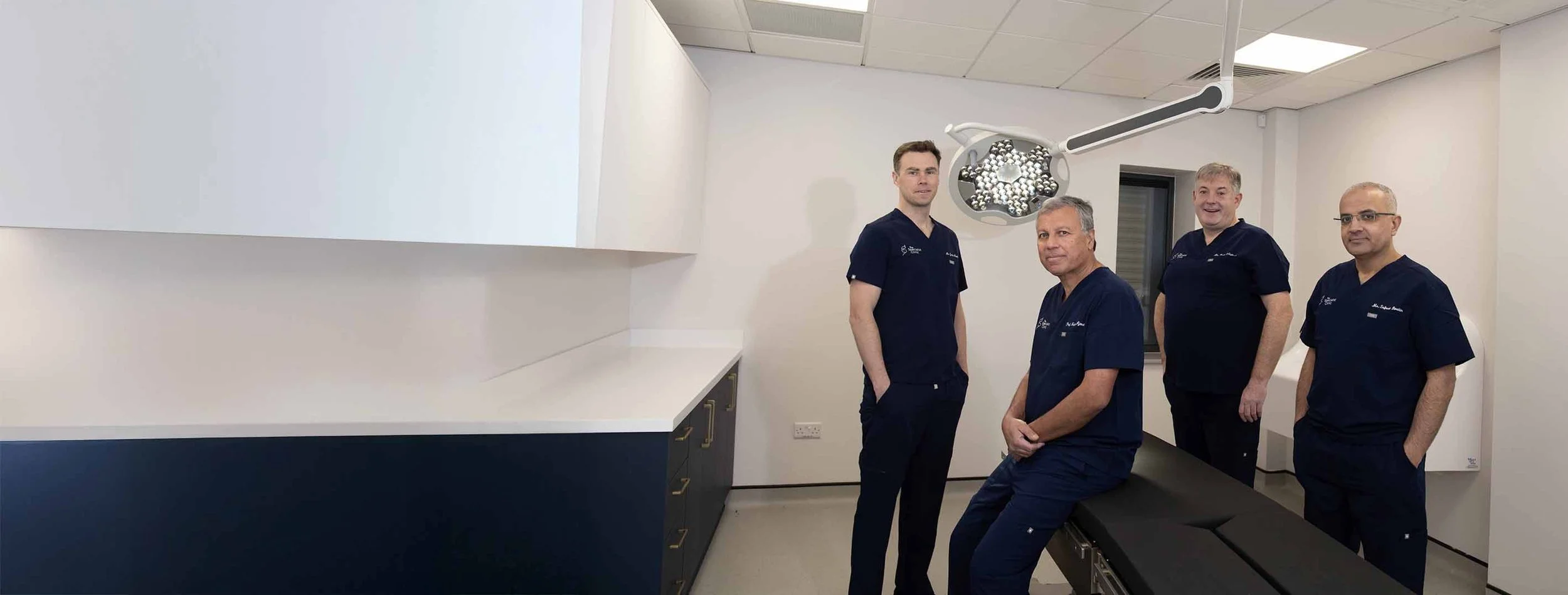
Plastic, Reconstructive & Aesthetic Surgery performed with Care and Compassion
To discuss whether facelift surgery is suitable for you, contact us to arrange a consultation. We will assess your facial ageing patterns, discuss your goals, and explain the techniques most appropriate for your anatomy.