

Scar Revision Surgery
Scar revision uses surgical and non-surgical techniques to improve the appearance and function of problematic scars from surgery, injury, burns, or other skin conditions. While all scars are permanent to some degree, many can be significantly improved. Scar revision cannot completely erase a scar, but can make it less noticeable, improve texture and colour, restore function when a scar is restrictive, and improve confidence. Most scars benefit from waiting twelve to eighteen months for full maturation before surgical revision, though functional problems such as contractures may warrant earlier intervention.
Types of Scars
Scars that commonly benefit from revision include hypertrophic scars (raised, red, thickened scars within the original wound), keloid scars (scars that grow beyond wound boundaries — more common in darker skin types), widened scars, depressed or atrophic scars, contracture scars (causing tightness and restricting movement), trapdoor deformities (circular scars with central protrusion), and scars placed unfavourably relative to natural skin lines.
Non-Surgical Treatments
Many scars improve with non-surgical approaches first:
Silicone gel or sheets: Applied consistently for three to six months, they flatten and soften hypertrophic scars.
Corticosteroid injection: Reduces inflammation and flattens raised scars. Multiple treatments spaced four to six weeks apart are often needed.
Laser treatment: A pulsed dye laser reduces redness; fractional CO2 or erbium laser improves texture; pigment-specific lasers address discolouration.
Pressure therapy: Compression garments worn twenty to twenty-three hours daily for six to twelve months reduce hypertrophic scarring, particularly after burns.
Dermal fillers: Temporarily elevate depressed scars.
Surgical Techniques
When non-surgical treatments are insufficient, surgical revision may be appropriate:
Scar excision and re-closure: The scar is removed and re-closed with meticulous plastic surgery technique, minimising tension and often reorienting along natural skin lines.
Z-plasty: A Z-shaped incision reorients and lengthens a contracted scar, breaking up a straight line and improving camouflage. Particularly effective for scars crossing natural lines at unfavourable angles.
W-plasty and geometric broken line closure: Create irregular zigzag patterns that break up a straight scar and improve camouflage along its length.
Scar excision with skin graft: For large contracture scars, the scar is excised and the defect covered with a graft to restore mobility.
Fat grafting: Autologous fat can fill depressed scars and potentially improve scar quality.
Your Recovery
Recovery varies by revision type. Simple excisions involve minimal downtime — return to most activities within one to two weeks. Complex revisions may require two to four weeks off work. The new scar is initially red and raised, improving over twelve to eighteen months with proper care including silicone gel, gentle massage, and sun protection. Steroid injections may be used if hypertrophic scarring develops.
Risks and Complications
Hypertrophic scarring or keloid formation — the new scar could heal as poorly as or worse than the original
Wound separation or healing problems
Infection or haematoma
Changes in skin sensation
Skin discolouration
Need for multiple procedures
Unsatisfactory appearance
Frequently Asked Questions
Can my scar be completely removed?
No technique can completely eliminate a scar. The goal is to trade a problematic scar for a thinner, flatter, better-positioned one. Your surgeon will discuss realistic expectations for your specific scar.
When is the best time for scar revision?
For cosmetic revision, waiting twelve to eighteen months for full maturation is generally recommended. Many scars improve significantly during this time with non-surgical treatment. Functional problems may warrant earlier intervention.
What about keloid scars?
Keloids are challenging because they tend to recur after excision. Treatment usually combines excision with steroid injections, radiation, or pressure therapy. Despite this, recurrence rates remain thirty to fifty per cent.
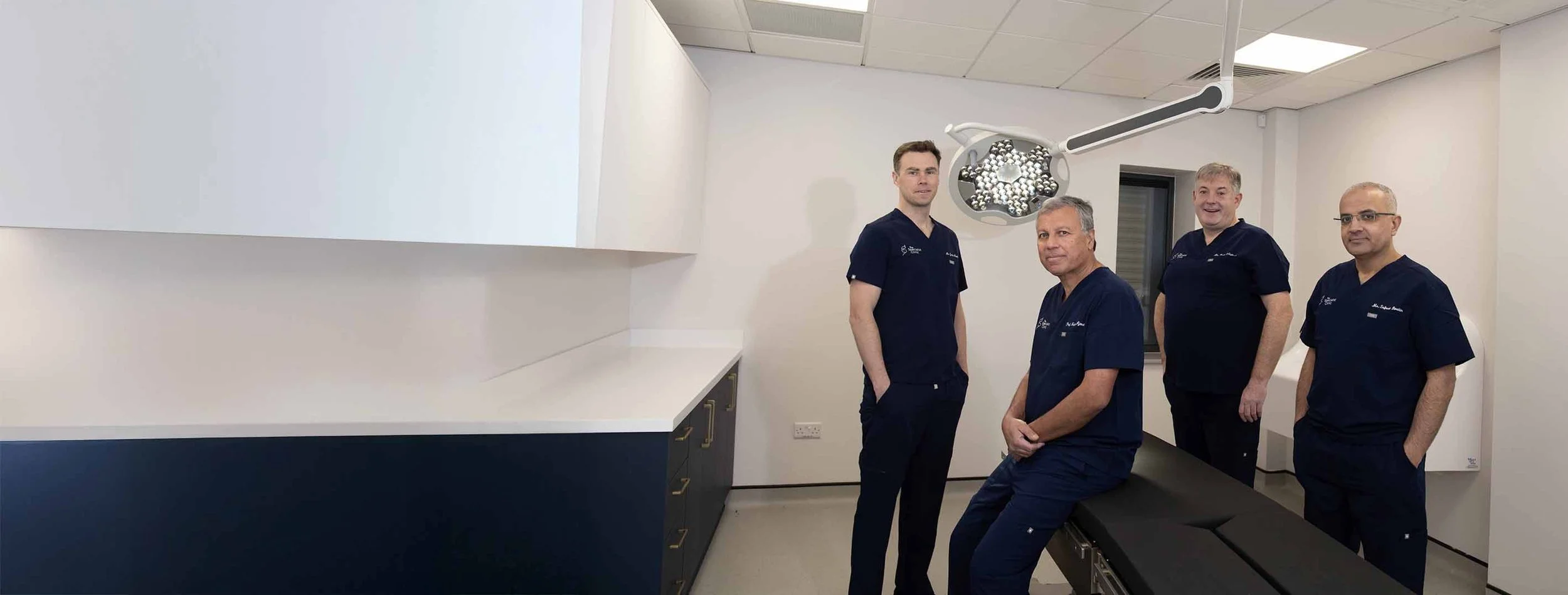
Plastic, Reconstructive & Aesthetic Surgery performed with Care & Compassion
If you have a problematic scar you would like to improve, contact us to arrange a consultation. We will examine the scar, discuss your concerns, explain all treatment options, and give you realistic expectations about achievable improvement.