

Skin Cancer Surgery
Skin cancer is the most common cancer worldwide. The three main types are basal cell carcinoma (BCC), squamous cell carcinoma (SCC), and melanoma. Early detection and complete surgical excisions offer the best chance of cure. Our consultant plastic surgeons work closely with dermatologists, oncologists, and pathologists to provide comprehensive care — combining thorough cancer removal with reconstruction techniques that optimise functional and aesthetic outcomes.
What does Skin Cancer Surgery involve?
Surgery involves excising the cancerous lesion with a margin of normal-appearing skin around it. Margin width depends on cancer type — BCC typically requires four to five millimetres; SCC four to six millimetres (more for high-risk lesions); melanoma zero point five to two centimetres depending on tumour thickness. The specimen is sent to pathology to confirm complete removal. If margins are not clear, further excision may be needed.
Reconstruction of the resulting defect depends on size, location, and tissue characteristics:
Primary closure: The wound edges are sutured directly together, with incisions planned along natural skin lines to minimise visible scarring. Suitable for small to moderate defects.
Skin grafts: Skin taken from a donor site is placed on the defect. Full-thickness grafts provide better colour and texture match for facial and hand defects; split-thickness grafts are used for larger areas. Grafts must be immobilised for five to seven days while new blood vessels grow.
Local flaps: Adjacent tissue is rearranged to close the wound, maintaining its own blood supply and providing superior colour and texture match compared to grafts. Numerous flap designs exist for specific locations.
Regional or free flaps: For very large defects, tissue from a nearby or distant area is transferred — described further in the Complex Reconstruction section.
Your Recovery
Recovery varies by procedure complexity. Simple excisions involve minimal downtime — return to most activities within days, sutures removed at five to fourteen days. Skin grafts require immobilisation for five to seven days and full graft maturation takes six to twelve months. Local flaps involve one to two weeks of swelling and bruising, with gradual return to activities over four to six weeks.
Pathology results are typically reviewed within one to two weeks. Long-term surveillance through regular skin checks and dermatology follow-up is essential for all patients.
Risks and Complications
Infection, bleeding, or haematoma
Wound healing problems
Unfavourable scarring
Graft failure (partial or complete)
Flap necrosis
Need for additional surgery if margins are involved
Recurrence — varies by cancer type and completeness of excision
Functional impairment depending on location
Frequently Asked Questions
Will I need additional surgery after the initial excision?
Your surgeon will discuss results with you at your follow-up appointment, and you may require additional surgery if pathology shows involved margins.
How can I prevent more skin cancers?
Daily broad-spectrum SPF30+ sunscreen, protective clothing, avoiding peak sun hours, never using tanning beds, monthly self-examination, and regular professional skin checks are all important.
Should I see a dermatologist after surgery?
Yes. Regular dermatology follow-up is essential to monitor for recurrence and detect new skin cancers early.
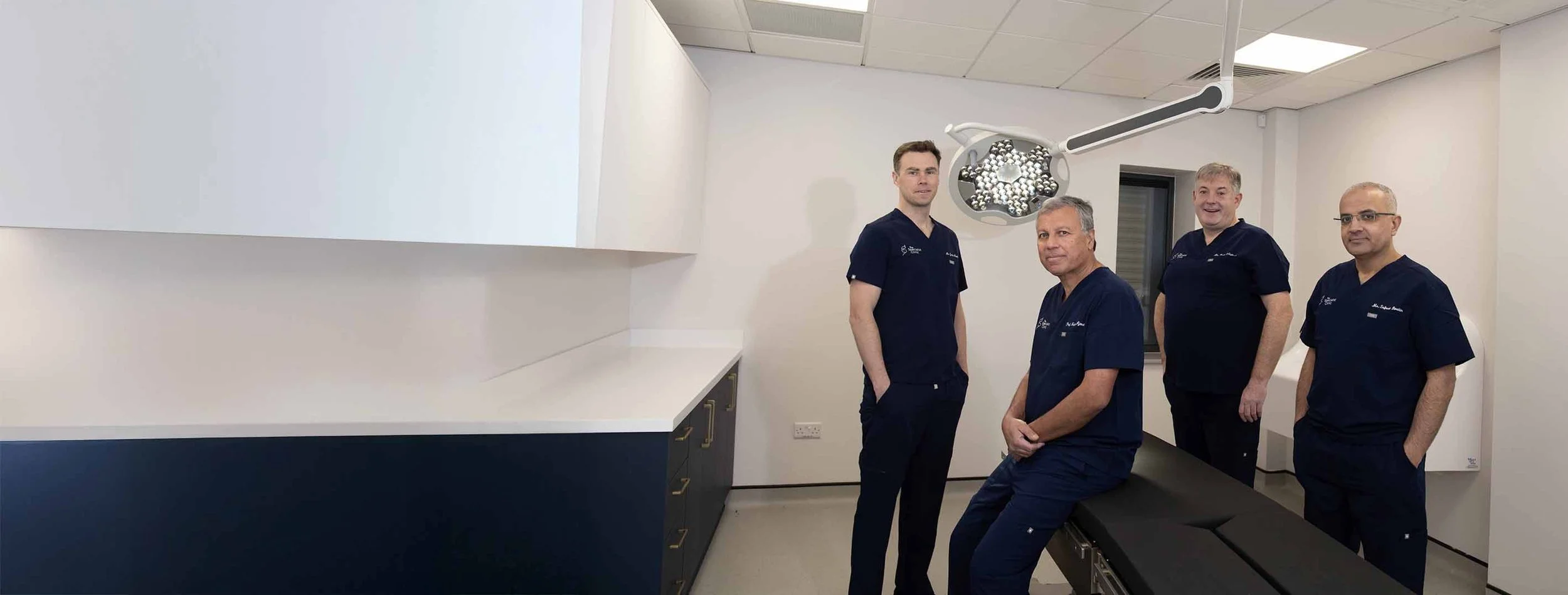
Plastic, Reconstructive & Aesthetic Surgery performed with Care and Compassion
If you have been diagnosed with skin cancer or have a suspicious lesion, contact us to arrange a consultation. We provide comprehensive skin cancer surgery and reconstruction, and can coordinate care with your dermatologist and oncology team as needed.