

Liposuction
Liposuction removes localised deposits of excess fat from specific areas of the body that do not respond to diet and exercise. Common treatment areas include the abdomen, flanks, thighs, upper arms, back, and neck. The procedure improves body proportions and contour rather than achieving overall weight loss, and is best suited to patients at or near their ideal weight.
What does the Liposuction procedure involve?
Your surgeon will assess the areas of concern, skin elasticity, and fat distribution before discussing realistic expectations. Treatment areas include the abdomen and waist, flanks, thighs, buttocks, upper arms, knees, neck, chest, and face.
Small incisions (three to five millimetres) are placed in discreet locations. Tumescent fluid is infiltrated into the treatment area to minimise bleeding and facilitate fat removal. A cannula is inserted and moved to break up and suction out fat. The surgeon sculpts the area to create smooth, natural contours.
Modern techniques include traditional suction-assisted liposuction (SAL), power-assisted (PAL), ultrasound-assisted (UAL/VASER), laser-assisted (LAL), and radiofrequency-assisted (RFAL) approaches. Your surgeon will recommend the most appropriate technique for your anatomy and goals.
Depending on the extent of treatment, surgery takes one to four hours under general or local anaesthetic with sedation. A compression garment is worn post-surgery for up to six weeks.
Recovery
Swelling, bruising, and tenderness are common for one to three weeks. Compression garments are worn for four to six weeks. Most patients return to desk work within three to seven days and can resume exercise after three to four weeks. Final contour is visible at six to twelve months as swelling fully resolves.
Risks and Complications
• Infection, bleeding, or haematoma
• Seroma
• Contour irregularities, dimpling, or asymmetry
• Under- or over-correction
• Changes in skin sensation
• Skin laxity if elasticity is poor
• Deep vein thrombosis
• Fat embolism (rare but serious)
• Need for revision surgery
Frequently Asked Questions
Will the fat come back?
Fat cells removed through liposuction are permanently gone. However, remaining fat cells can enlarge with weight gain. Maintaining a stable weight is essential for lasting results.
Can liposuction treat cellulite?
Liposuction is not an effective treatment for cellulite and can sometimes worsen its appearance.
What if I have loose skin?
Liposuction works best when skin elasticity is good. Significant loose skin may require a procedure that also removes excess skin.
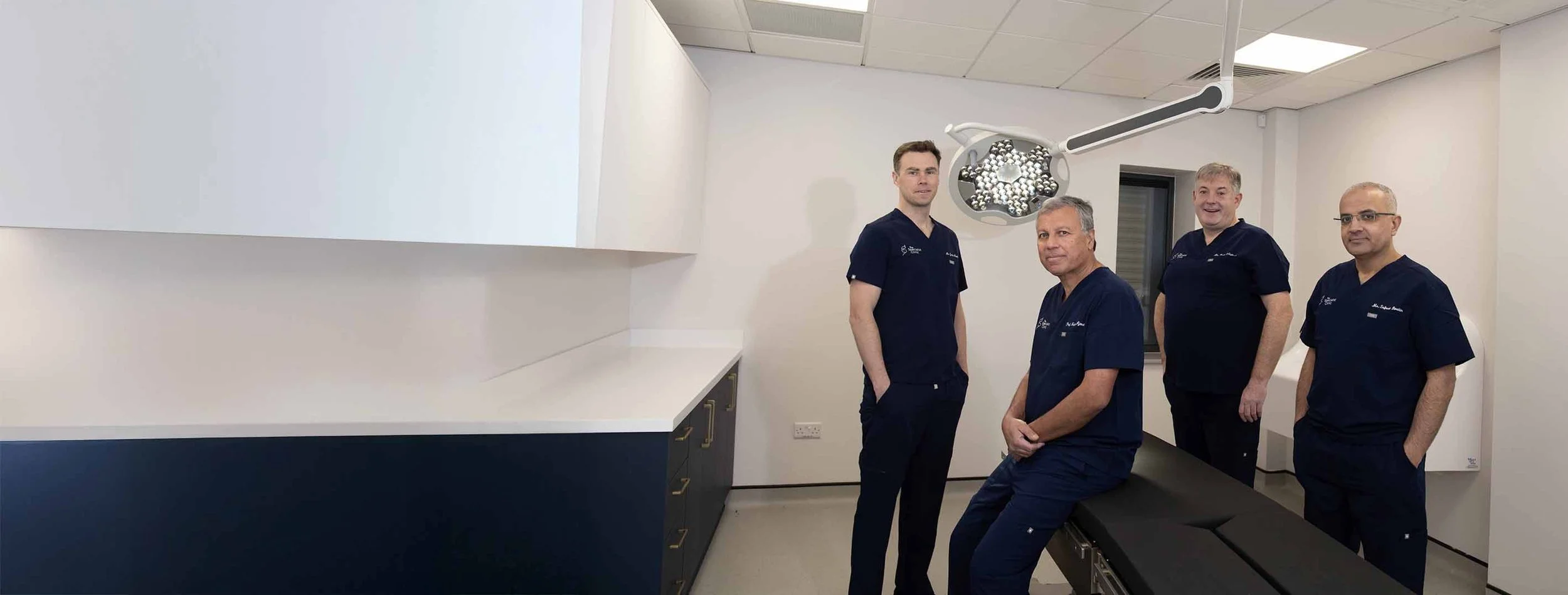
Plastic, Reconstructive & Aesthetic Surgery performed with Care and Compassion
To discuss liposuction and whether it is suitable for your concerns, contact us to arrange a consultation with one of our consultant plastic surgeons.